The Economics of Transformative AI
Course Overview
In this course, we explore the interplay between artificial intelligence and economic growth through the lens of foundational and emerging models.
Some claim that advanced AI will greatly:
- Accelerate economic growth,
- Displace labor, and/or
- Risk existential catastrophe.
This two-week summer course covers a selection of tools in (mainly) economic theory relevant to evaluating the first two claims, and deciding what to do if some or all of them seem likely.
The course is designed primarily for graduate students in economics. Others may also benefit from the material, including advanced undergraduates and computer science students.
This course will not be run in summer 2026.
If you’d like to be notifed in the event that applications open for a similar program in the future, please let us know here.
ETAI Summer Course interest formSchedule (August 2025)
Opening Weekend (August 16-17): (Optional but recommended) We revisit key concepts in economics, including utility and production functions, substitution, and the basics of growth, setting the stage for more advanced topics.
Week 1 (August 18-22): We dive into AI in standard growth models, beginning with automation’s role in production (both reduced-form and task-based models) and moving to its impact on research alone, and research combined with production. The week concludes by examining scaling and its implications.
Week 2 (August 25-29): We shift to alternative growth models, exploring Schumpeterian ideas, finance and knowledge distribution, and the trade-offs between efficiency, equality, and long-term welfare. The week ends by addressing philosophical questions about long-term survival versus flourishing and strategies for risk mitigation.
Lecture Structure
Most lectures were given by Phil Trammell, a postdoc in economics at the Stanford Digital Economy Lab. Some lectures were given by Zach Mazlish, a doctoral student in economics at Oxford, while others were conducted by guest lecturers including Chad Jones, professor of economics at Stanford GSB, and Erik Brynjolfsson, Stanford professor and director of the Lab.
Each day consisted of a morning lecture and an afternoon lecture, except the opening Saturday, which only had an afternoon lecture. Each lecture featured two 45-minute halves separated by a 15-minute break.
Feedback from 2025
The course was attended in August 2025 by 48 students from around the world: 32 pursuing or about to start PhDs in economics, 1 pursuing a PhD in computer science, 13 doing research or research assistance at a university or think-tank, and 2 undergraduates. We are proud to say that it was reviewed highly overall, with a significant majority who would strongly recommend it.
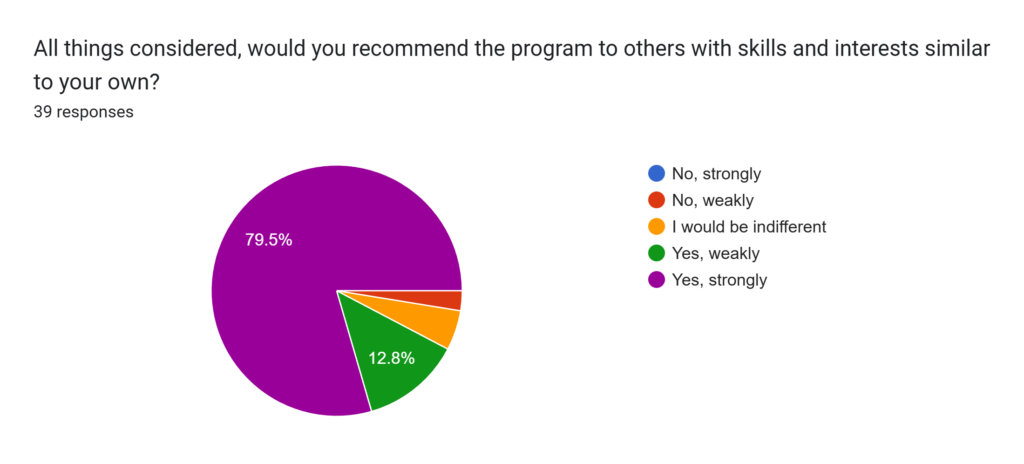
Among other comments, participants suggested that the program would have been improved with (1) more scheduled opportunities for networking and sharing research ideas; (2) more discussion concretely linking the microeconomic effects of AI observed today with the macroeconomic models of what may happen if AI greatly advances; and (3) a session reviewing the relevant material and terminology regarding AI itself, analogous to the opening weekend’s review of the relevant economics. We plan to incorporate this feedback going forward.
Course Materials (August 2025)
In some places, the lectures were re-recorded due to audio issues. Otherwise, they are taken from when the lectures were given live in August 2025. Note that the slides in the recordings sometimes contain errors that were corrected in the slides linked below.
Exercises accompanying some of the lectures may be found here.
The sources listed under each lecture are not exhaustive. In some cases, the majority of the lecture consists of an overview summarizing (or touching briefly on) too many sources to list individually, or of material not from any source.
We have linked to the Overleafs that produced the slides, as well as the slides themselves, in case you would like to use them. You are free to use them for any purpose, with or without modification.
Review of relevant economics
001 Optimization and substitution Slides, Overleaf, Recording
002 Stylized facts of production and growth Slides, Overleaf, Recording
003 Technological development Slides, Overleaf, Recording
Part 1: Growth
01 Task-based models: theory Slides, Overleaf, Recording
02 The productivity J-curve (Erik Brynjolfsson) Slides, Recording
- Brynjolfsson et al. (2021)
- Brynjolfsson, Chandar, Halperin, and Trammell (in progress)
03 Task-based models: evidence Slides (a, b [Arjun Ramani]), Overleaf, Recording
- Acemoglu (2025), Aghion and Bunel (2024)
- Humlum and Vestergaard (2024)
- Levine (2025a,b)
- Brynjolfsson, Halperin, and Ramani (in progress)
04 Task-based models: selected research Slides (a [Tomas Aguirre], b [Bharat Chandar]),
- Aguirre and Manning (in progress)
- Brynjolfsson, Chandar, and Chen (2025)
05 Automating production, homogeneous output Slides, Overleaf, Recording
06 Automating production, heterogeneous output Slides, Overleaf, Recording
- Bessen (2018)
- Nordhaus (2021)
- Trammell (in progress)
07 Automating research: basics Slides, Overleaf, Recording
- Sotala (2012)
- Aghion et al. (2019)
- Agrawal et al. (2019)
- Besiroglu et al. (2024)
- Eth and Davidson (2025), Davidson and Houlden (2025)
08 Automating research: bottlenecks Slides, Overleaf, Recording
09 Full automation and the Malthusian past Slides (a, b), Overleaf, Recording
10 Full automation: BOTECs and bottlenecks Slides, Overleaf, Recording
- Davidson and Hadshar (2025)
- Trammell (2025a,b)
Part 2: Scaling, finance, risk
11 Scaling laws: basics Slides, Overleaf, Recording
12-13 Scaling laws: growth models Slides (Anson Ho), Recording (12), Recording (13)
14 TAI and finance Slides, Overleaf, Recording
15 AI safety Slides (a, b [Max Reith], c [Eric Chen and Sami Petersen], d), Overleaf (a, d),
- Thornley (2024, 2025), Thornley et al. (2025)
- Chen et al. (2024)
- Trammell (2024)
16 TAI and social welfare Slides (a, b), Overleaf (a, b), Recording
A Inequality
B Longtermism
- Bostrom (2003)
- Nordhaus (2009)
- Beckstead (2013), Greaves and MacAskill (2021)
- Thorstad (2022)
- Trammell and Aschenbrenner (2025), App. A
17 Existential risk vs. growth Slides (a [Chad Jones], b [Tom Houlden]), Recording
18 Existential risk and growth Slides, Overleaf, Recording
19 AI governance Slides (a, b), Overleaf (a, b), Recording
- Armstrong et al. (2015), Trager, Dafoe, Jensen, and Emery-Xu (various)
- Acemoglu and Lensman (2024), Gans (2024), Koh and Sanguanmoo (2024)
20 Choosing our future Slides, Overleaf, Recording
- MacAskill (2025)
- Trammell (in progress)
- Assadi (2023), Ely and Szentes (2024)
- Finnveden et al. (2022)
Watch the first (post-economics-review) lecture on the theory of task-based models
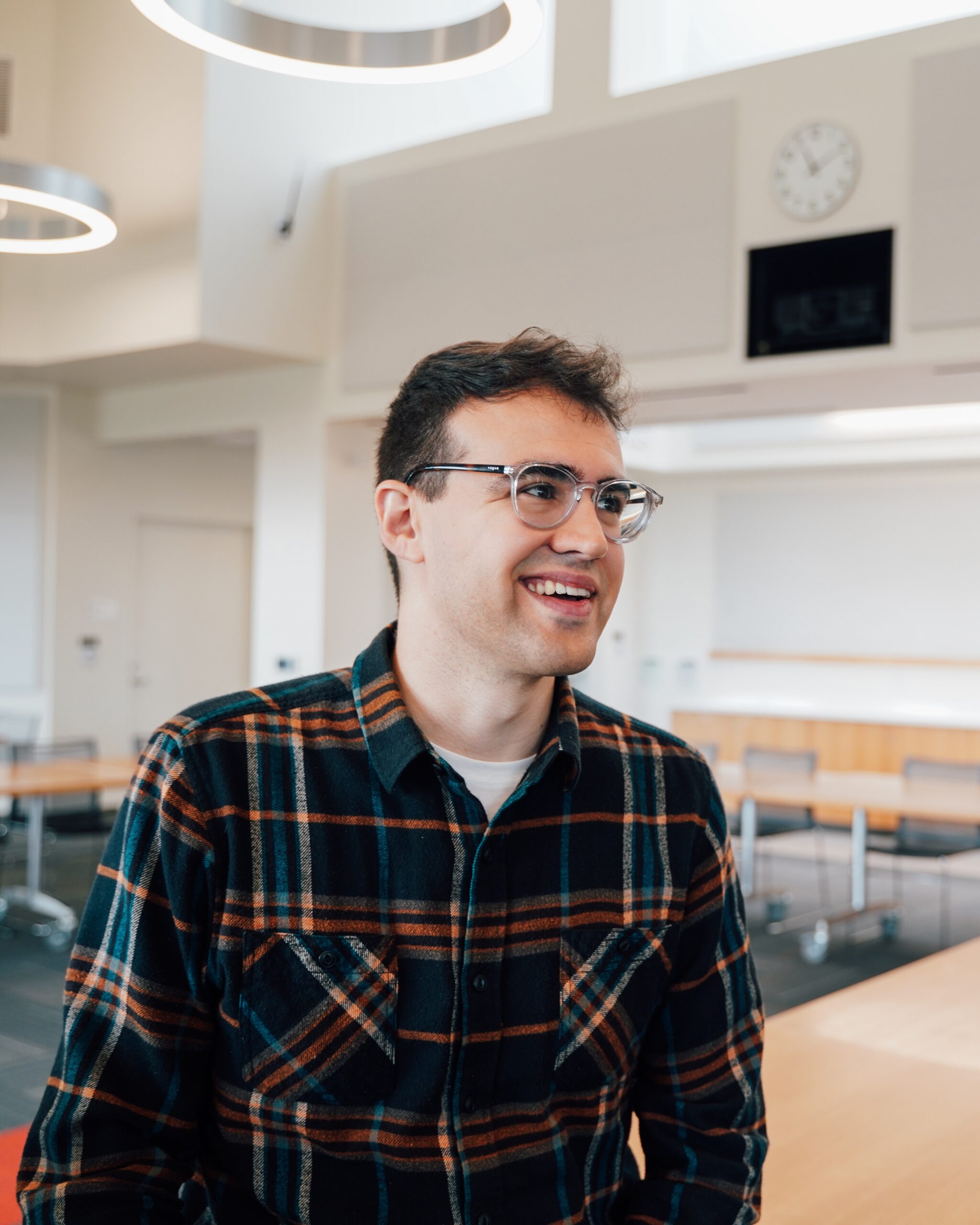
Phil Trammell
Postdoctoral Fellow
Phil is an economics postdoc working with Erik Brynjolfsson and Chad Jones (of Stanford GSB) on questions related to economic growth and AI. He’s mainly working on theoretical questions regarding the consequences of building machines intelligent and dextrous enough to automate essentially all work. With Erik and others at the lab, Phil is thinking about the macroeconomic trends that we should expect to observe at the beginning of such a transition, and about the extent to which we are starting to observe these trends today.
Read more