Monday, October 12, 2026 / 12:00pm to 1:00pm Pacific Time
Neil Thompson: Forecasting AI’s Impact on Human Expertise and the Future of Work
- Hybrid
- Seminar
The DEL Seminar Series is proud to host a diverse roster of bright minds from around the world to discuss various subjects surrounding economics and technology.
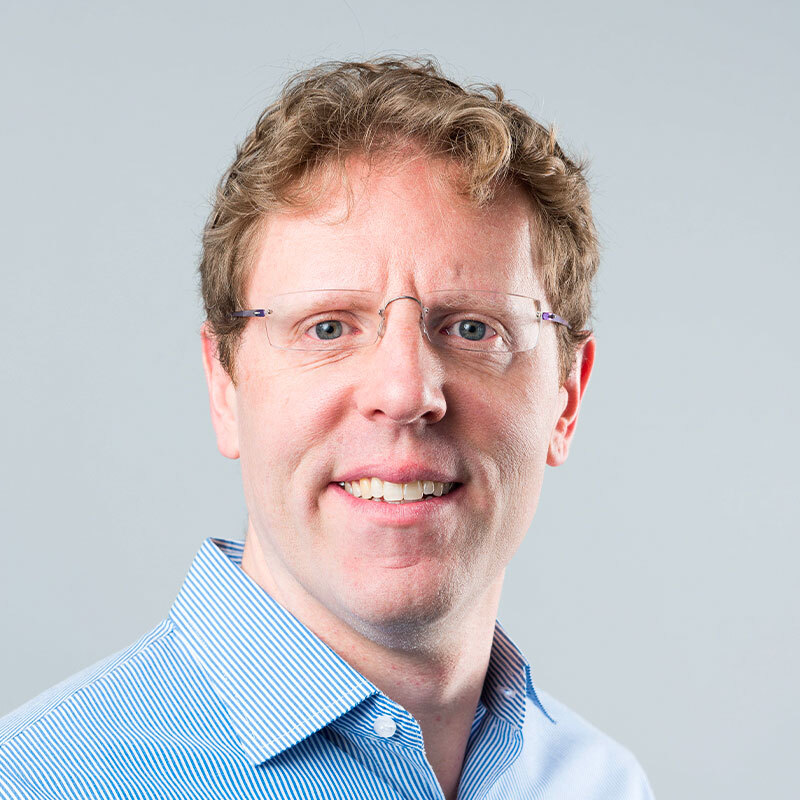
On October 12, 2026, Neil Thompson, Principal Research Scientist at MIT, will stop by the lab for our seminar series.
Abstract
AI is advancing rapidly at the cognitive tasks that make up knowledge work, raising fears among firms, policymakers, and, not least, workers of a “China shock” for white-collar jobs. Neil Thompson will present new research on whether those fears are warranted. The research asks which tasks AI will take over and what that means for the expertise required in the work that remains. The time a skilled person needs for a task strongly predicts whether AI can do it, and AI is handling ever-longer tasks.
Building on this pattern, the research forecasts how AI will change the skills, entry barriers, and wages of occupations across the pay spectrum through 2030. Neil will also share findings from MIT FutureTech’s Crashing Waves vs. Rising Tides study, which draws on 60,000+ evaluations by experienced workers and shows AI capabilities rising steadily and broadly across tasks rather than in sudden jumps.
Neil Thompson is an Innovation Scholar at MIT’s Computer Science and Artificial Intelligence Lab and the Initiative on the Digital Economy. He is also an Associate Member of the Broad Institute.
Previously, he was an Assistant Professor of Innovation and Strategy at the MIT Sloan School of Management, where he codirected the Experimental Innovation Lab (X-Lab), and a Visiting Professor at the Laboratory for Innovation Science at Harvard University. He has advised businesses and government on the future of Moore’s Law and Machine Learning, and has been on National Academies panels on transformational technologies and scientific reliability.
He did his PhD in business and public policy at UC Berkeley, where he also did Master’s degrees in computer science and statistics. He has a Master’s in economics from the London School of Economics, and undergraduate degrees in physics and international development. Prior to academia, he worked at organizations including Lawrence Livermore National Laboratories, Bain and Company, The United Nations, the World Bank, and the Canadian Parliament.