by Shu Yang and Beth Porter
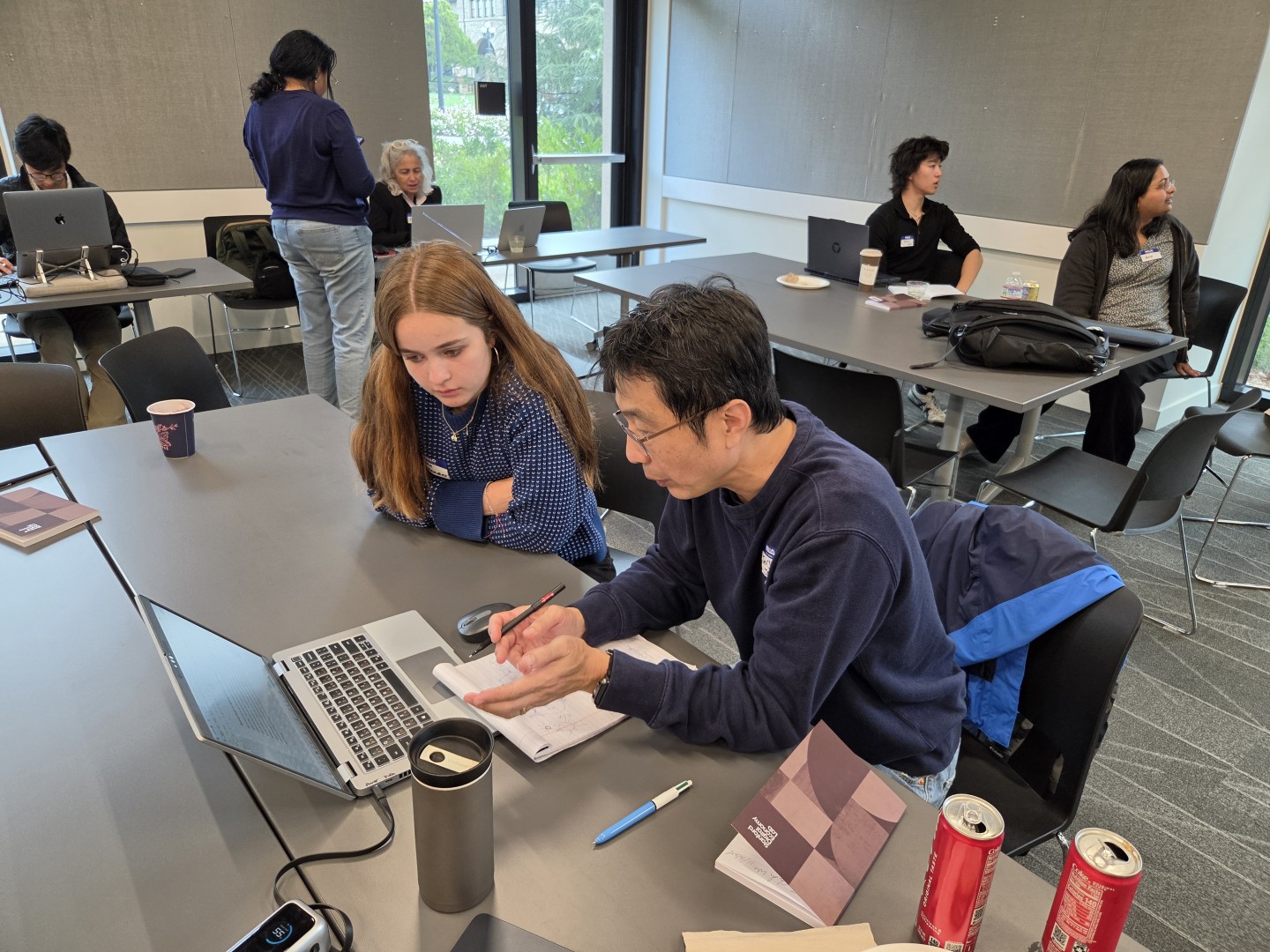
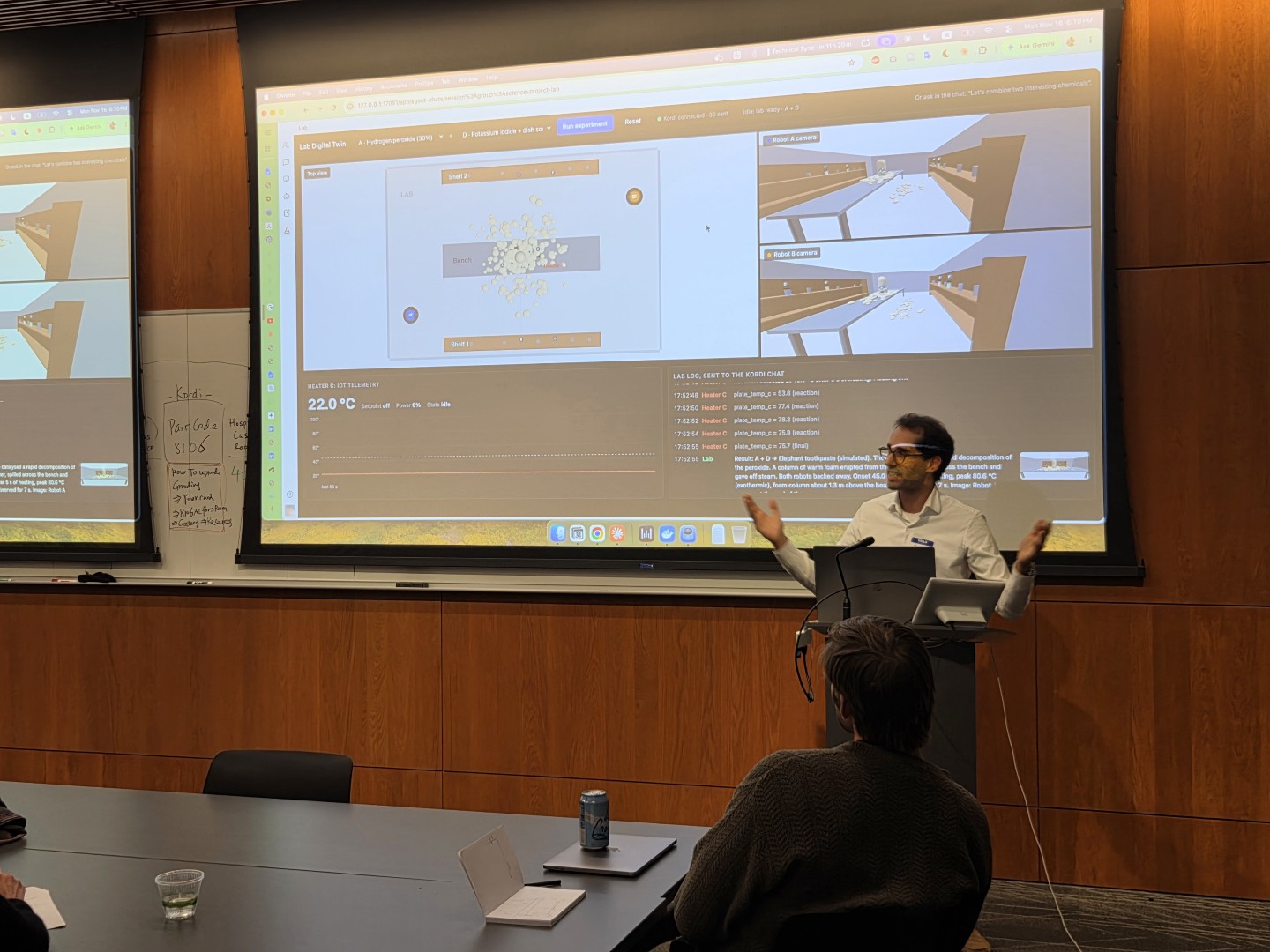
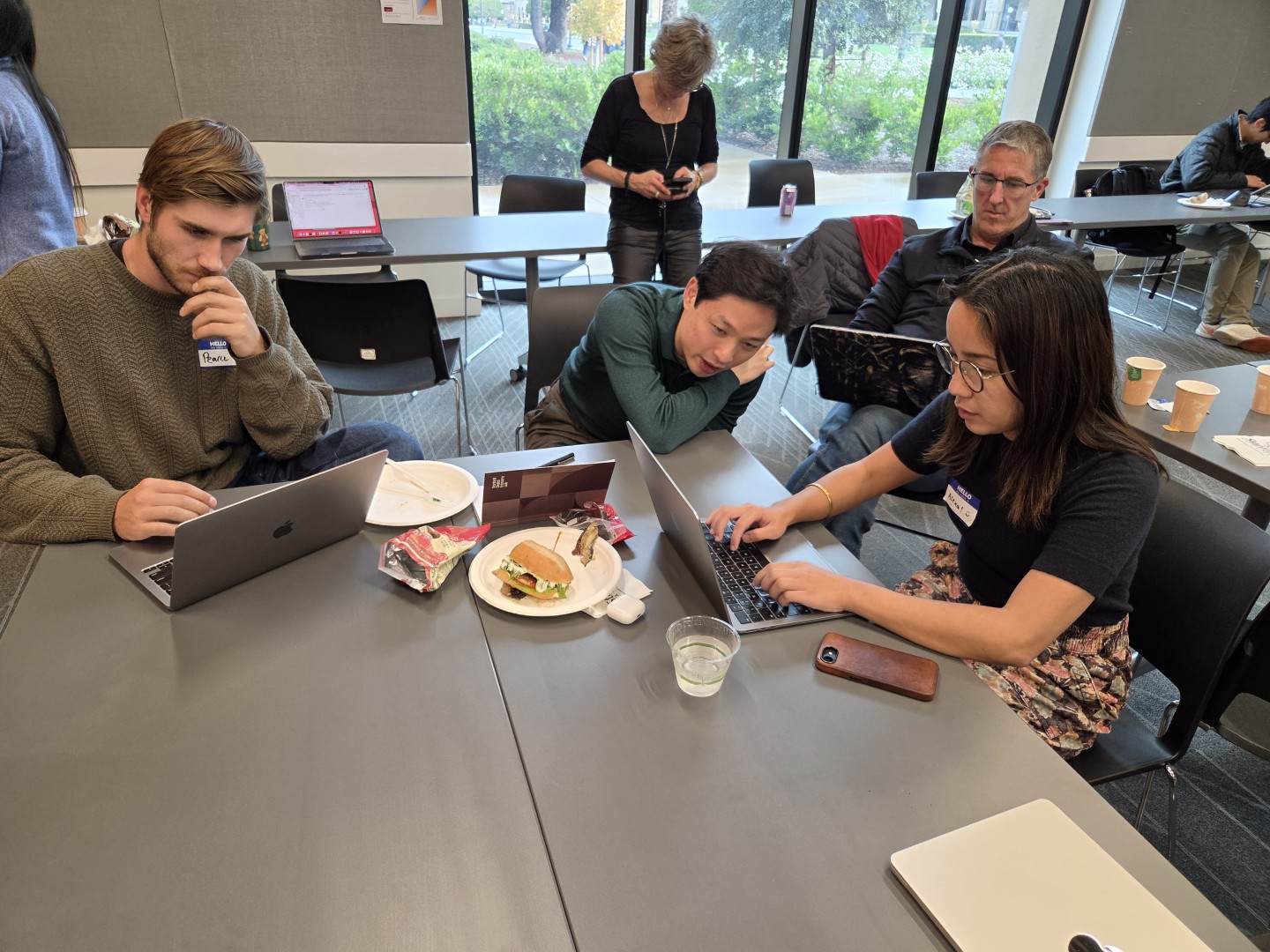
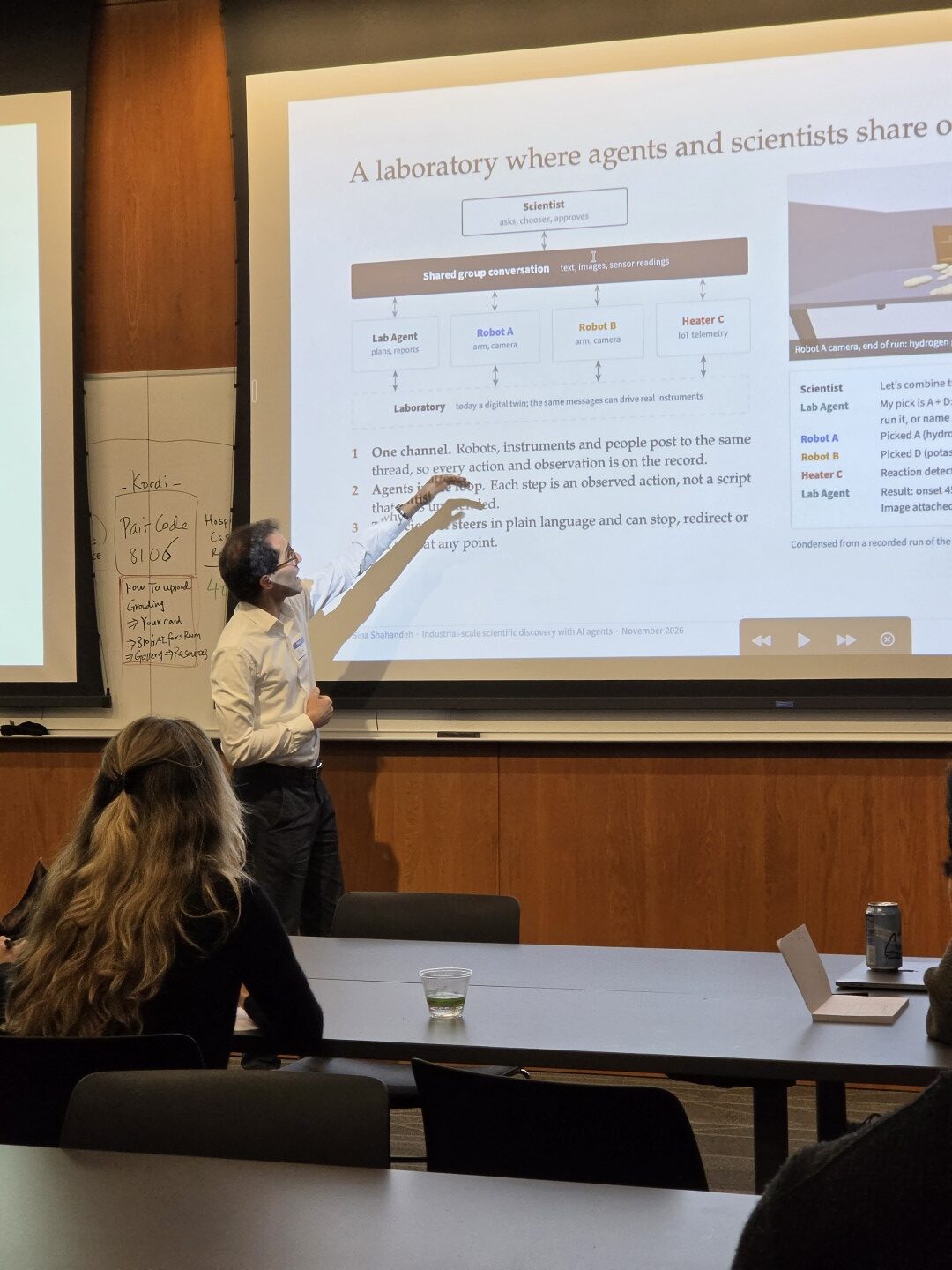
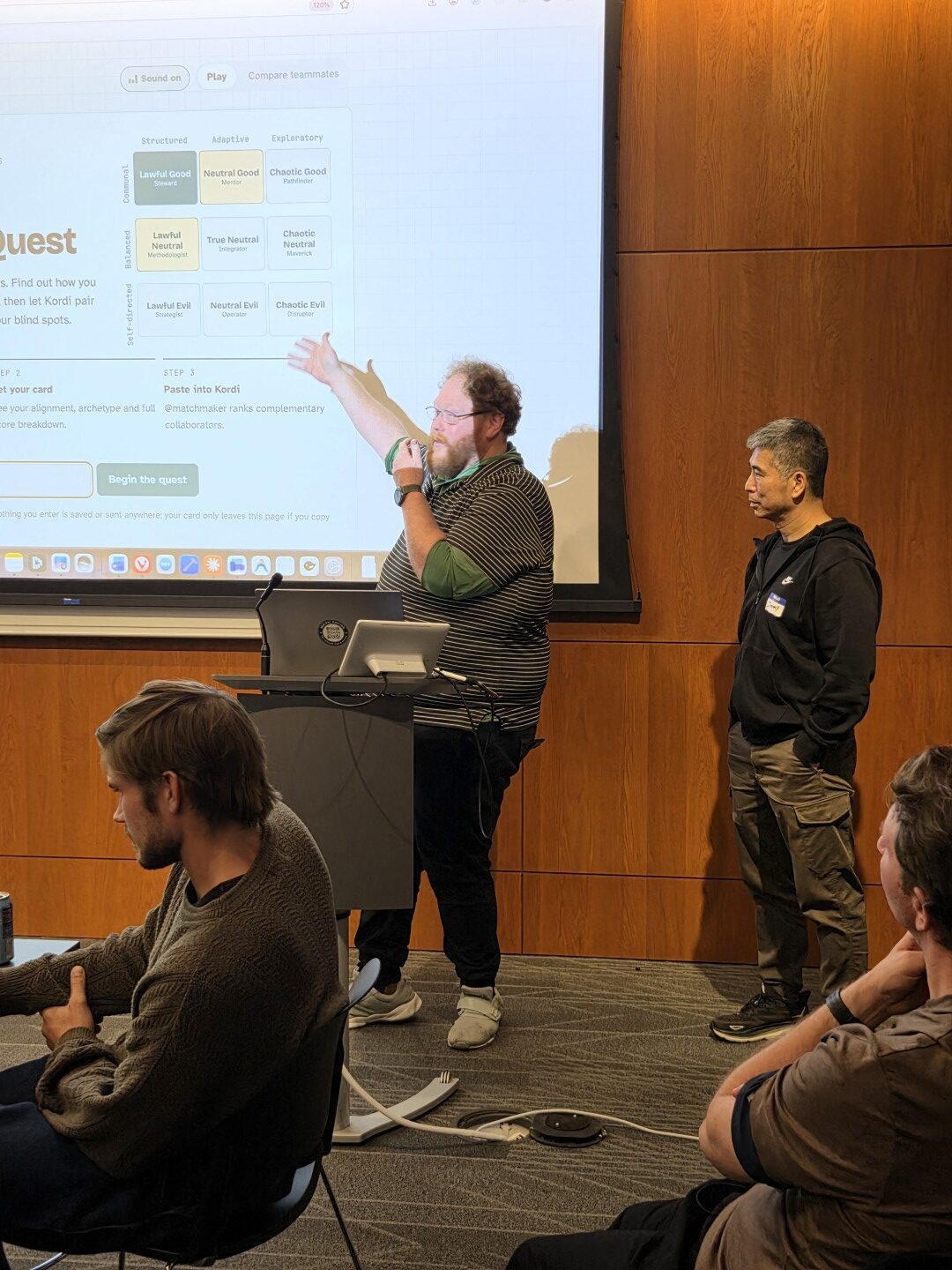
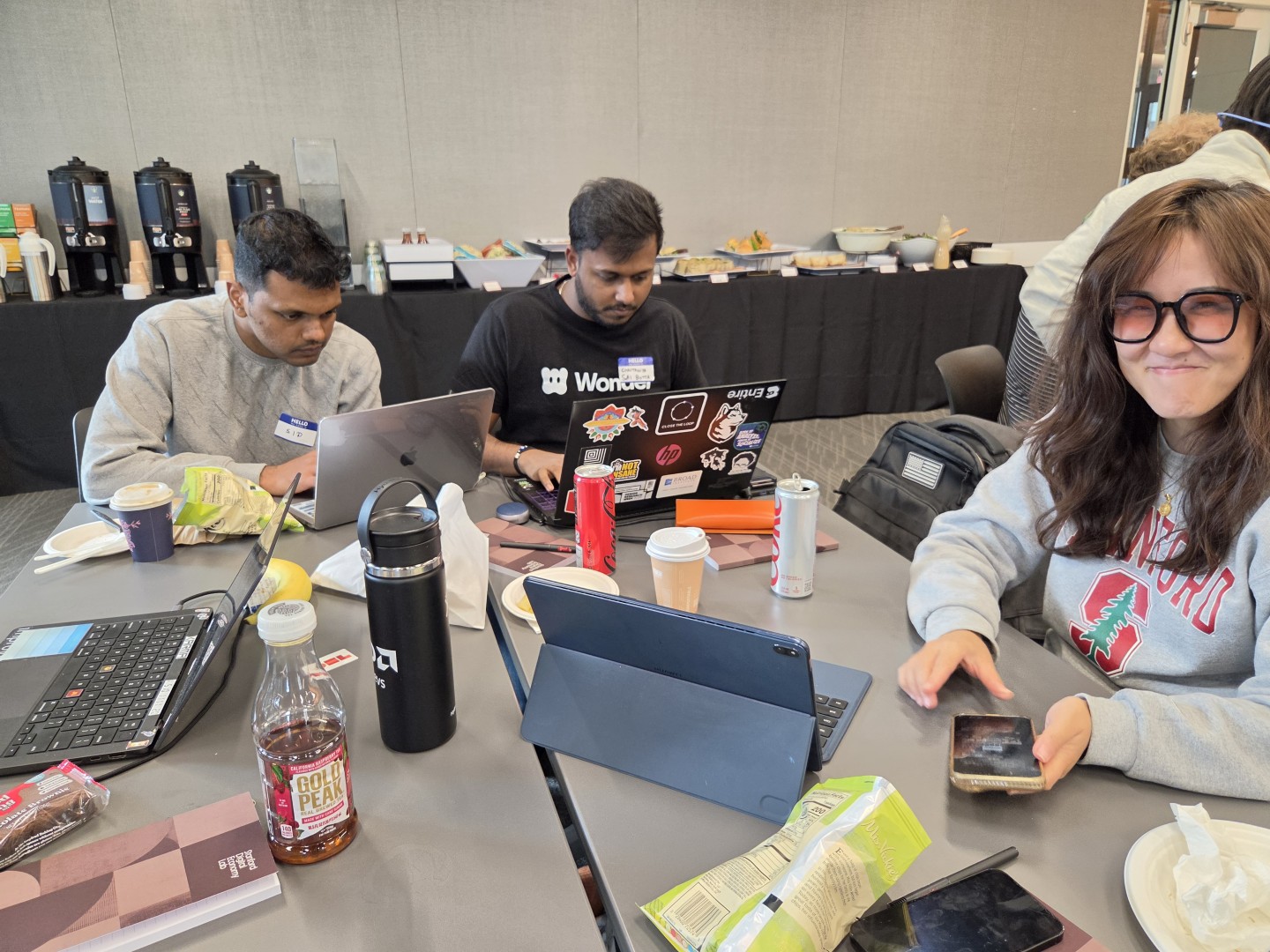
On November 16, about 40 researchers, students, and builders, from Stanford and beyond, gathered at Stanford’s Computing and Data Science building to work alongside each other and alongside their AI agents. The question behind the AI in Science Collaboration hackathon was simple: what changes when everyone on a research team brings their own context and their own agent? By design, the day started with 16 two-person teams that merged into eight larger ones, so people had to bring their work, their context and their agents into new groups as they progressed through the day. By the demo, the most interesting answers were less about what agents could build for the people they work for than about how people and agents share what they know to further collaboration.
Why human-AI collaboration is worth studying
Science is done in teams, and how those teams form and work has measurable effects: in one field experiment, simply putting prospective collaborators in the same small breakout room raised later joint grant proposals by 75%. AI agents now take part in every stage of research, from literature review to study design to building prototypes. But most tools still assume one person and one assistant. Real collaboration involves several people, each with private knowledge, different goals and, increasingly, their own agent. That makes a research team a natural place to study one key question at the heart of Loyal Agents, a Stanford Digital Economy Lab initiative studying how AI agents can act in their users’ interests – when an agent works in a group, whom does it serve, and what does it do with information that belongs to someone else?
Kordi: a research platform for people and their agents
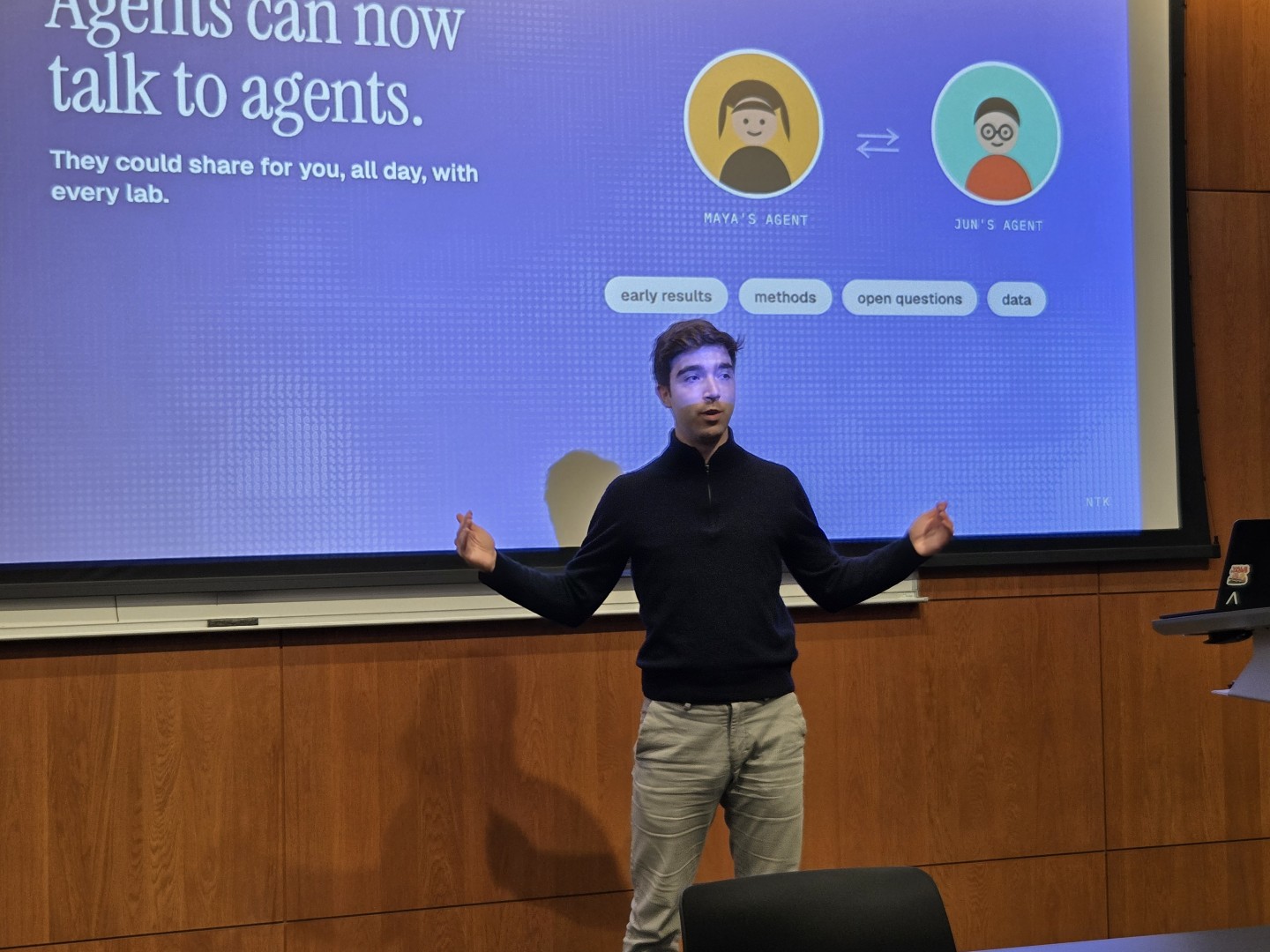
The hackathon ran on Kordi, a research platform from the Stanford Digital Economy Lab and the Loyal Agents initiative for studying how people and AI agents interact and collaborate. Participants bring their own context and their own agents, from any model provider. Kordi uses the Human Context Protocol (HCP), an open protocol for sharing personal context, to enforce each person’s permissions. Each participant gets an agentic “business card,” built automatically from the context they share, that helps match them with potential collaborators. Today that matching works on research topics, but topic alone doesn’t make a good team: people differ in pace, temperament and what they want from the work. Inside Kordi, people can chat with each other and with agents, or send their own agent to talk with someone else’s agent on their behalf. A built-in facilitator agent helps keep the group’s work moving.
What teams expected, and what happened
Eight teams demoed at the end of the day. Three of them show the range of what happened, and each set out to build one thing and learned something else along the way.
Team A formed through Kordi’s matching and merged separate ideas into a single question. One member worked with a long-running agent that read the event brief and the HCP specification, debated scope and built a storyboard, while a teammate shaped the onboarding and social use cases. They set out to build an app for collecting personal context. They ended the day with a protocol and a demo for agent-to-agent context sharing on top of HCP, because the hard part turned out to be what happens after context is collected. As the team put it, “HCP covers who can read context; nothing covers what an agent repeats to another agent.”
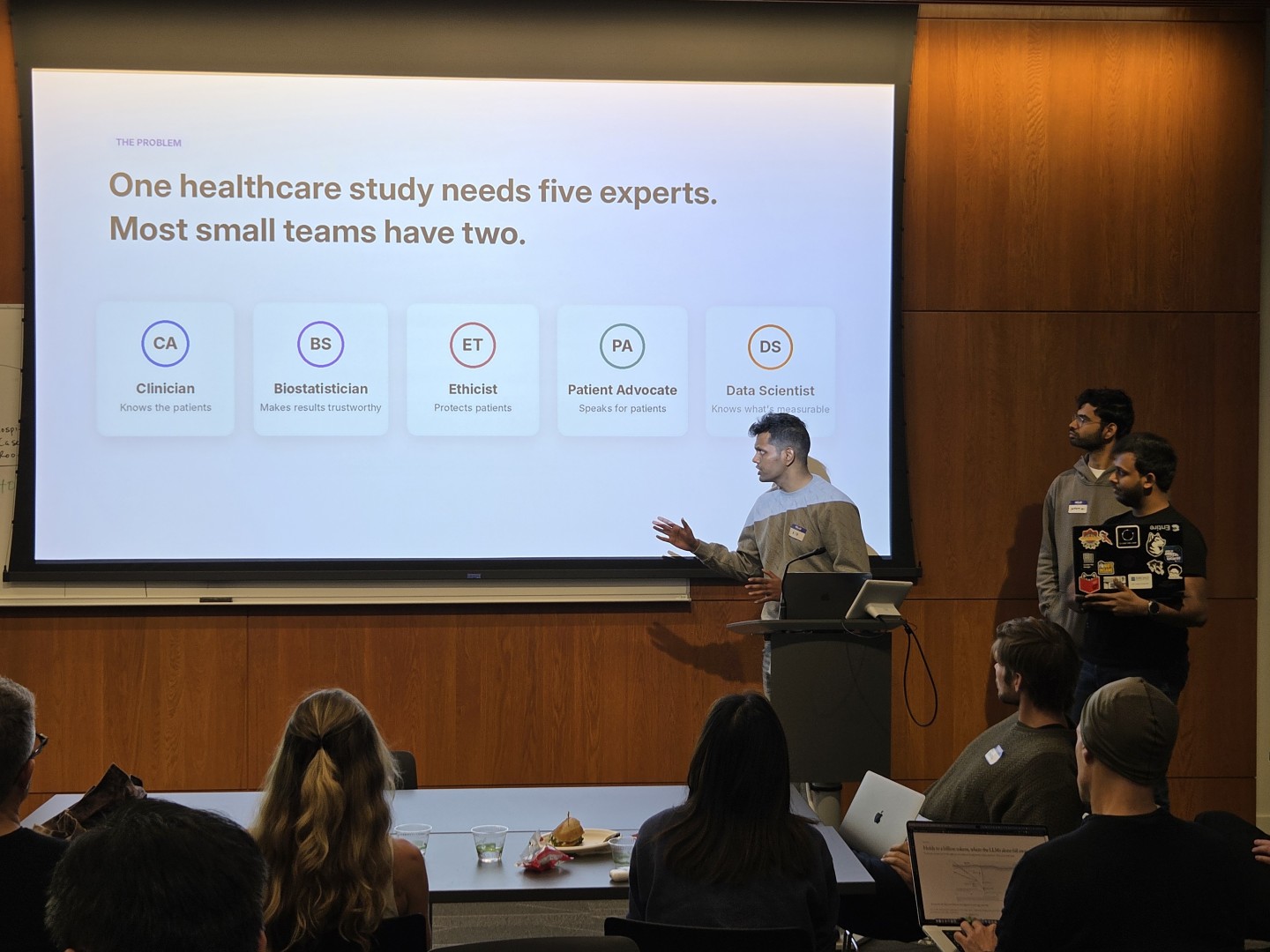
Team B formed during the day and split the work by strength: study design, building, and agent setup and testing. They built a panel of expert agents with a moderator, and divided ownership of the agents among members to test whether each agent would follow only its owner. While the agents debated, the team built a live dashboard that reads the chat and tracks decisions, conflicts and privacy leaks. The debate went better than expected. Without being prompted, the agents settled on a randomized design with a control group and flagged the ethics review timeline, and the biostatistician agent correctly pushed back that the planned sample was too small to detect a realistic effect. The ownership test did not go as well: the agents took instructions from anyone in the group, not just their owners. The team ended the day with an agreed study plan, a working dashboard, and a clearer picture of how loosely an agent’s loyalty holds in a group.
Team C worked in a single channel. One member owned the repository and the specification, another drove the interface and the demo script, and a third member’s agent did most of the execution. They expected each person’s agent to work in parallel and hand off work through a shared repository. In practice, nearly everything ran through several background agents on one member’s laptop. That member’s rate limit ran out, and the build stalled close to the demo. Once the team switched to another member’s agent account, the app was built within minutes. The result was a web app that answers health questions about a widely used class of drugs by showing clinical evidence and real-user reports side by side, grading every claim, and never offering dosing advice or a diagnosis. The hardest constraint of the day turned out to be whose account was paying for the work, not what the agents could do.
What we learned
Sharing information
Three findings concern information: what agents reveal, what counts as context, and what can be taken back.
Access control is not disclosure control
Team A’s line, that HCP covers who can read context but nothing covers what an agent repeats, turned out to describe a pattern across the day. Permission systems, HCP included, govern what an agent can access. Participants found that the harder problem comes a step later, when the agent speaks. In one test, each agent was given private notes and told never to share them. The agents kept personal details, such as an upcoming promotion, to themselves. But they gave away the notes that mattered to the discussion: how far their owner was willing to back down, or data only they had. As participants put it, “Agents can’t tell ‘use this to shape your argument’ from ‘say this out loud.’”
Other participants wrote rules to close the gap. An agent may use private information to form its plan but must never state it. Every request must say who is asking and why, and the agent shares only what that purpose requires. Before sending a reply, the agent checks it and rewrites anything that could give a secret away. Their example came straight from science: when two labs’ agents set up a collaboration, each side gets the schedule and the published paper, but not the unpublished result or the plan to move the lab.
Rules like these help, but they don’t settle the problem. Our own research finds that agents in multi-party conversations disclose more as the conversation gets longer and more stakeholders join, which describes almost any real research collaboration.
Rethinking what context is
Much of the day’s real context was never entered into the Kordi app. One group’s idea moved across the table from a data marketplace for wet labs, to a wellness coach, to an evidence platform, each step building on something another person had just said. The group kept a meeting note-taker running and found that it “summarizes everything and doesn’t hone in on specific moments.” What they wanted instead was a record of how the idea evolved: “a causal chain from inception to idea to prototype.”
This fits how Paul Dourish describes context: not a fixed set of facts to store and serve, but something the activity itself produces. It also creates a practical problem. Participants often couldn’t say ahead of time what their context was, so they preferred to share whole logs and histories and let an agent summarize them. Context also has a life cycle. Some of it, like progress on a task, matters for an hour; some, like how a teammate likes to work, matters for months. No one can predict in advance which part will matter.
That puts this finding in tension with the previous one. The safest way to share is to share only what’s needed, but people often can’t know what’s needed until afterward.
Ownership, departure and recovery
Because teams merged by design, people kept changing groups, and they brought along what they had built with their agents in an earlier group, or even before the event. Who has a claim to that work, and what an agent may still do with it, is hard to define. So is what leaves with a person who departs a group and what stays behind.
We saw small versions of each problem. With no explicit rules in place, some default boundaries held. One member’s agent would not use its owner’s GitHub access on behalf of another member’s agent, and an agent committed to a branch rather than to main so a person could review first. Other boundaries did not hold. As with Team C, one member’s quota was spent by the whole group, and after the merges, messages could not be moved from a direct message into the new group’s channel.
There turned out to be three kinds of undo: restoring a lost message or document version, reversing an action an agent took, and withdrawing information that has already been disclosed. Only the first two are within reach. Taking back a permission works only going forward: a person can stop an agent from reading something from now on, but cannot take back what it has already said. Once an agent has revealed someone’s private notes, they stay revealed. That is why the group that wrote the sharing rules asked for a visible log of what was shared, one that “expires with the purpose.”
Taken together, these findings point to two lessons about information sharing. The practical one is that permissions are necessary but not sufficient. An agent allowed to read something still has to decide whether to repeat it; every fix participants proposed was a rule about speech, not access. The deeper lesson is that information in a collaboration doesn’t sit still. It is produced by the work, its value changes over time, and once it has been said, it can’t be unsaid. A protocol can govern who holds what; a collaboration also has to govern what moves between people, and when.
Working with groups
Advisor, facilitator, representative
Different groups, and different people within a group, needed their agents to play very different roles. One team made up of undergraduates wanted an advisor: an agent that would tell them what a good hackathon result looks like and how to work together. A group of senior researchers from different fields, who saw the topic differently, needed to find common ground and keep the work moving. They wanted a neutral facilitator, like Kordi’s built-in agent, that would not steer the conversation in any particular direction. A group that already had a goal wanted something else again: each agent speaking on behalf of its owner, discussing it with other agents and people, and building the artifacts step by step.
The right role depends on who is in the group and how much experience they have. Each role also implies a different answer to the question of whom the agent serves. An advisor serves the people learning from it, a facilitator serves the group as a whole, and a representative serves one person.
From single-threaded to multi-threaded collaboration
Collaboration between people has traditionally been single-threaded: talk, make a plan, do the work, discuss, plan again. Action follows thinking. At the hackathon, much of the work ran in parallel. Team B’s agents debated the study design while the team built a dashboard to track the debate. In Team A, one member’s long-running agent was scoping the project and building a storyboard while a teammate worked on onboarding. Agents produced visualizations, demos and literature reviews throughout the day, and those outputs often shaped the discussion instead of following it.
That reverses the usual order: action can now steer thinking. It also complicates the facilitator role. A group can ask an agent not to steer the conversation, but an agent that keeps producing artifacts is steering it anyway.
Who pays, who decides, who gets credit
Not everyone at the hackathon had an agent, or enough tokens to run one, and some teams felt the difference. In Team C, one member’s agent did most of the work for everybody. Anyone could give it instructions, so the group’s requests used up that member’s quota, and the build stalled until the team switched accounts. This is a fairness problem: one person pays for the agent’s work, while several people decide what it does. The team asked for two fixes: let everyone see what each person’s requests cost, and let the owner approve or limit what others spend.
Team B ran into the same problem from the other side. Their agents were told to follow only the person who created them, and they took instructions from anyone in the group without hesitation. So in a group, an agent’s work can be paid for by one person, directed by several, and loyal to no one in particular. That raises a credit question no one could answer on the day: if someone lets the whole group use their agent, or brings the most capable one, should they get more of the credit for the result?
“When an agent works in a group, whom does it serve, and what does it do with information that belongs to someone else?”
Open questions
The day left us with more questions than answers. These are the ones we’re taking forward:
- What may an agent say? Permissions govern what an agent can read. How should people set rules for what it repeats, and do those rules belong in the protocol, the platform or the agent itself?
- What counts as context? If context is produced by the work and no one knows in advance what will matter, what should be captured, what should be kept, and what should expire?
- Whom does a shared agent serve? When one person pays, several people direct it, and it follows anyone, whose agent is it? Who decides whether it acts as advisor, facilitator or representative, and who gets credit for its work?
- What leaves with a person? When someone leaves a group, which work, context and permissions go with them, and which stay with the group?
- Who should work together? Matching collaborators by topic is easy. It’s trickier for agents to help people find collaborators who fit in pace, temperament and goals, especially outside their usual circles.
- How would we know it worked? What should we measure to show that agents make collaboration better: the ideas a team finds, how fast it moves, how “healthy” it stays, or how information flows between its members?
What’s next
We designed the day to see what happens when everyone brings their own context and their own agent to a collaboration. The answer was that the hard questions start after the context is shared, with what agents say, whom they serve, and what can’t be revoked. We’ll keep studying these questions in Kordi, possibly through more hackathons, and the findings will feed into the next versions of the Human Context Protocol, which powers context sharing in Kordi. The more capable agents become as collaborators, the more it matters whose interests they bring to the collaboration.
About the authors
Shu is a Ph.D. candidate in Computer Science at King Abdullah University of Science and Technology (KAUST) and a Visiting Student Researcher at the Stanford Digital Economy Lab (Stanford HAI), where Shu works closely with Sandy Pentland and Jiaxin Pei. Shu is building the next generation of human–agent collaboration.
Read more