Reflections on a convening at Stanford
On November 17, 2026, the Stanford Digital Economy Lab and Holtzbrinck hosted The Future of Authorship, a convening exploring the role of authorship in the age of AI. The Lab’s Erik Brynjolfsson and Andreas Haupt join Holtzbrinck’s Daniel Hook and Katharina Neubert to reflect on the discussions and what they suggest about the future of credit and accountability in AI-assisted work.
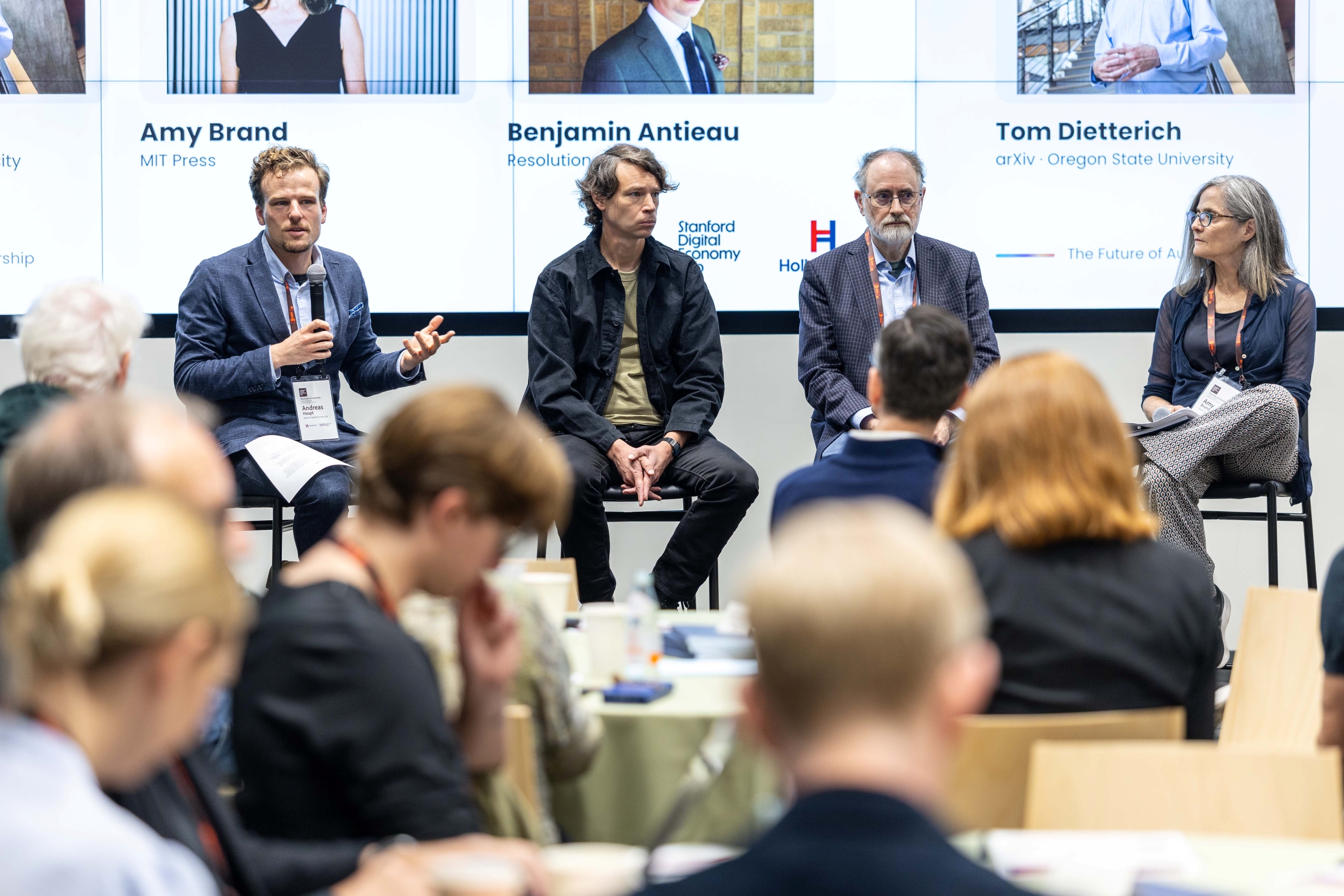
by Erik Brynjolfsson, Andreas Haupt, Daniel Hook, and Katharina Neubert
For more than a century and a half, the Riemann Hypothesis has been considered the greatest problem in mathematics. So it was arresting to hear, just three days after our convening at Stanford, that Levent Alpöge, a mathematician at Anthropic, believes he has proved it, working with the company’s Claude model. A day later, the Lean and Mathlib communities certified the formal proof as correct. The announcement follows OpenAI’s announcement in September of a solution to a version of the Navier–Stokes problem and its release in October of 722 manuscripts claiming progress on hundreds of other questions. Humans—with the help of AI—now seem capable of making progress on questions in a matter of weeks which used to take mathematicians a lifetime or more. But what is the relationship of the humans to their discoveries? By Alpöge’s own account, Claude outpaced him near the end, and he has not yet mastered all of the mathematics around the result. The proof currently exists only as Lean code. It would run more than 250,000 pages if printed. (In contrast, his July counterexample to the Jacobian conjecture, also found with Claude, fit in a single X post.) This poses questions for what it means to be an author:
- Should Alpöge be credited for the proof?
- Should he receive the Clay Institute’s million-dollar prize?
- Should he be held accountable for any errors?
In the past, a byline carried a bundle of roles and messages: credit, accountability, control, compensation and certification of competence. They were combined because writing was costly. But now that writing is cheap, they seem to be coming apart, and society struggles to redefine who answers and who gets credit. This fall the Académie Goncourt dropped a prize-winning novel from its selection after claims that it was largely machine-written. Weeks later, the eventual winner said he had used AI three times in writing his own book. How the roles of authorship should be rebundled was the focus of a convening to design the Future of Authorship that we hosted at Stanford on November 16–17, 2026.
Fifty participants were invited with a focus on authors and those who support them: Publishers of university presses weigh the future of the journal and the textbook; university administrators bring questions around AI use by learners in their writing; technologists create new types of artifacts that authors and readers can engage with; news outlets watch attribution and remuneration fall apart as AI cuts journalists off from their readers, and look for new business models. The premise of the convening was that exchange between different groups, would bring out similarities across fields to tackle a common challenge.
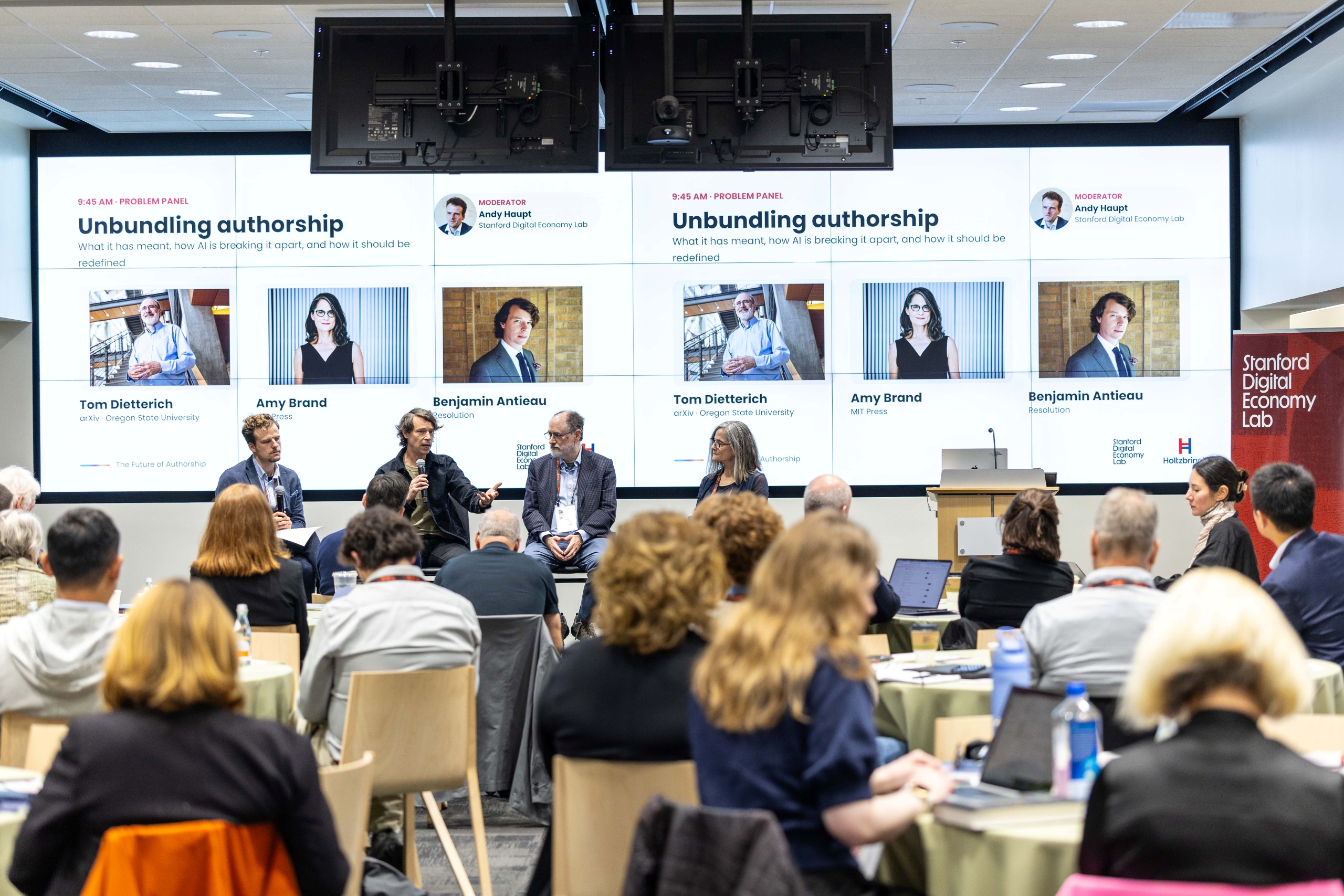
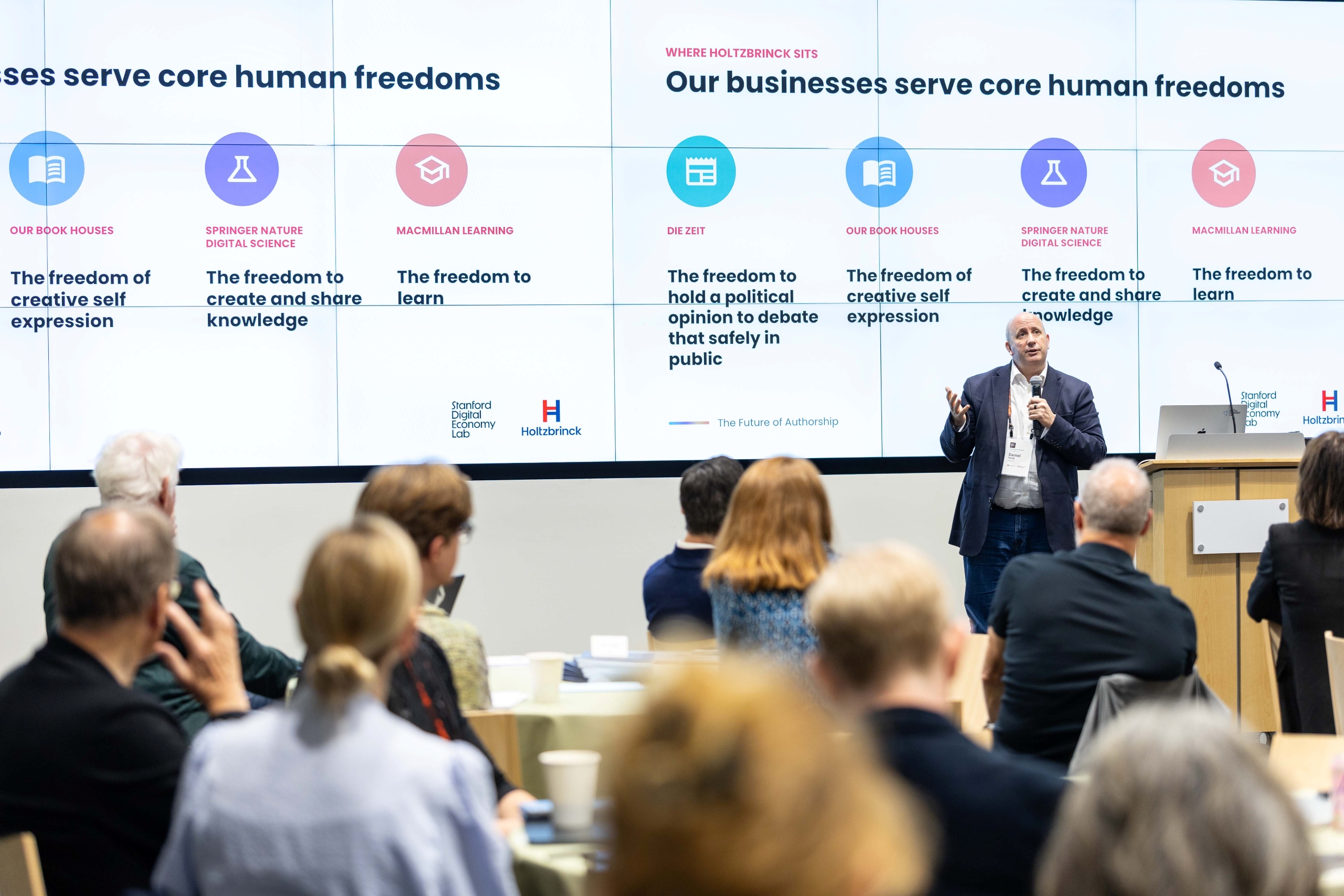
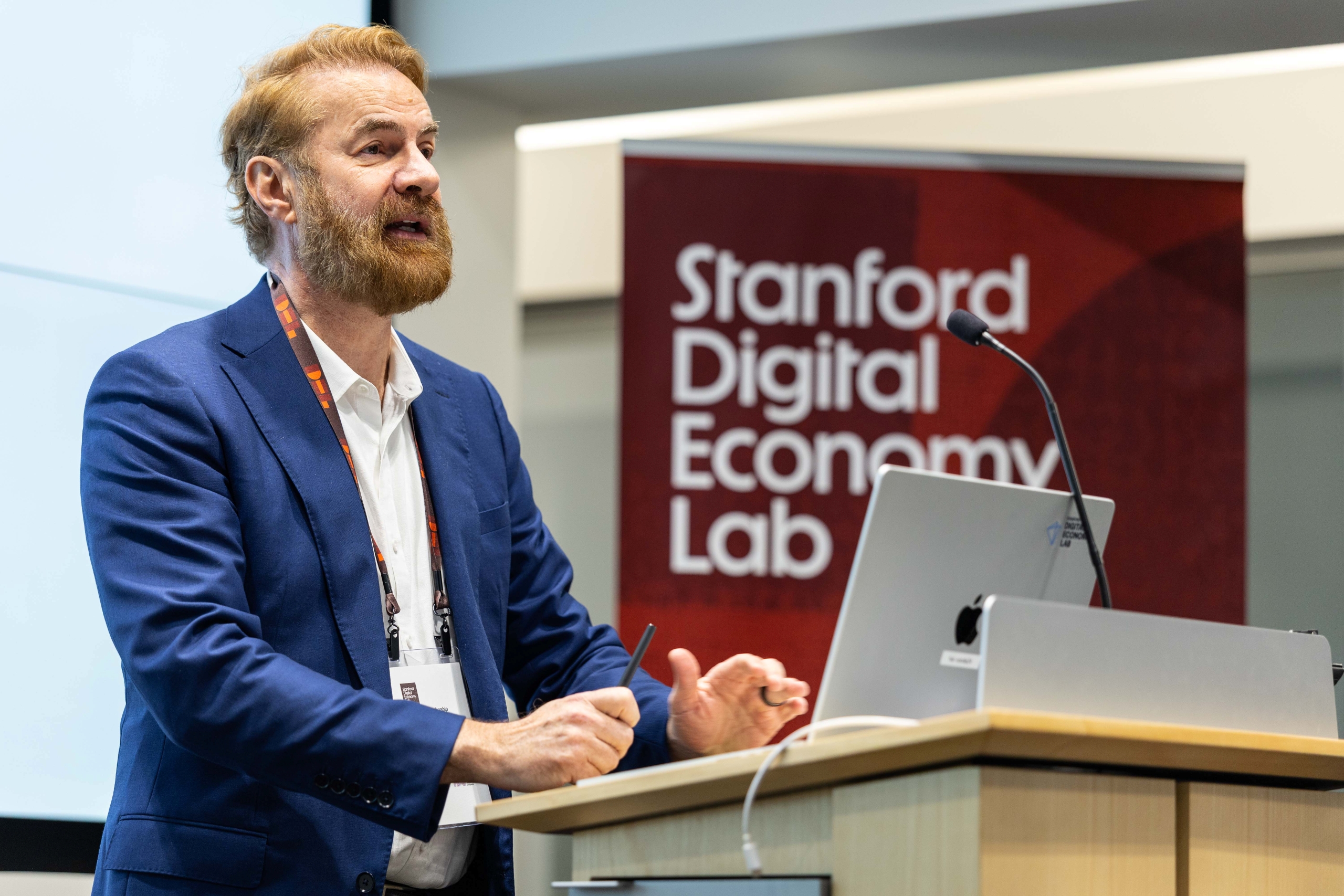
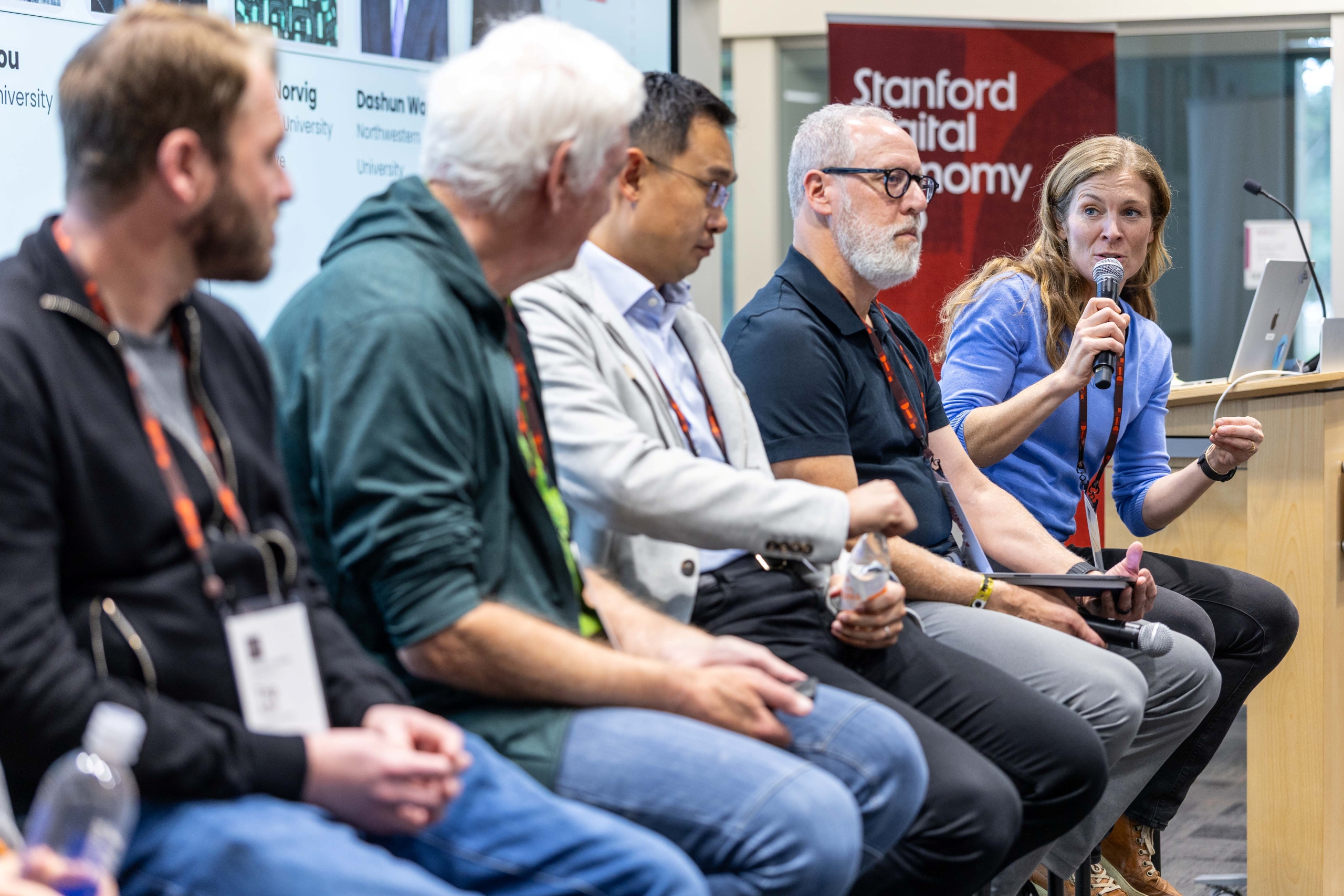
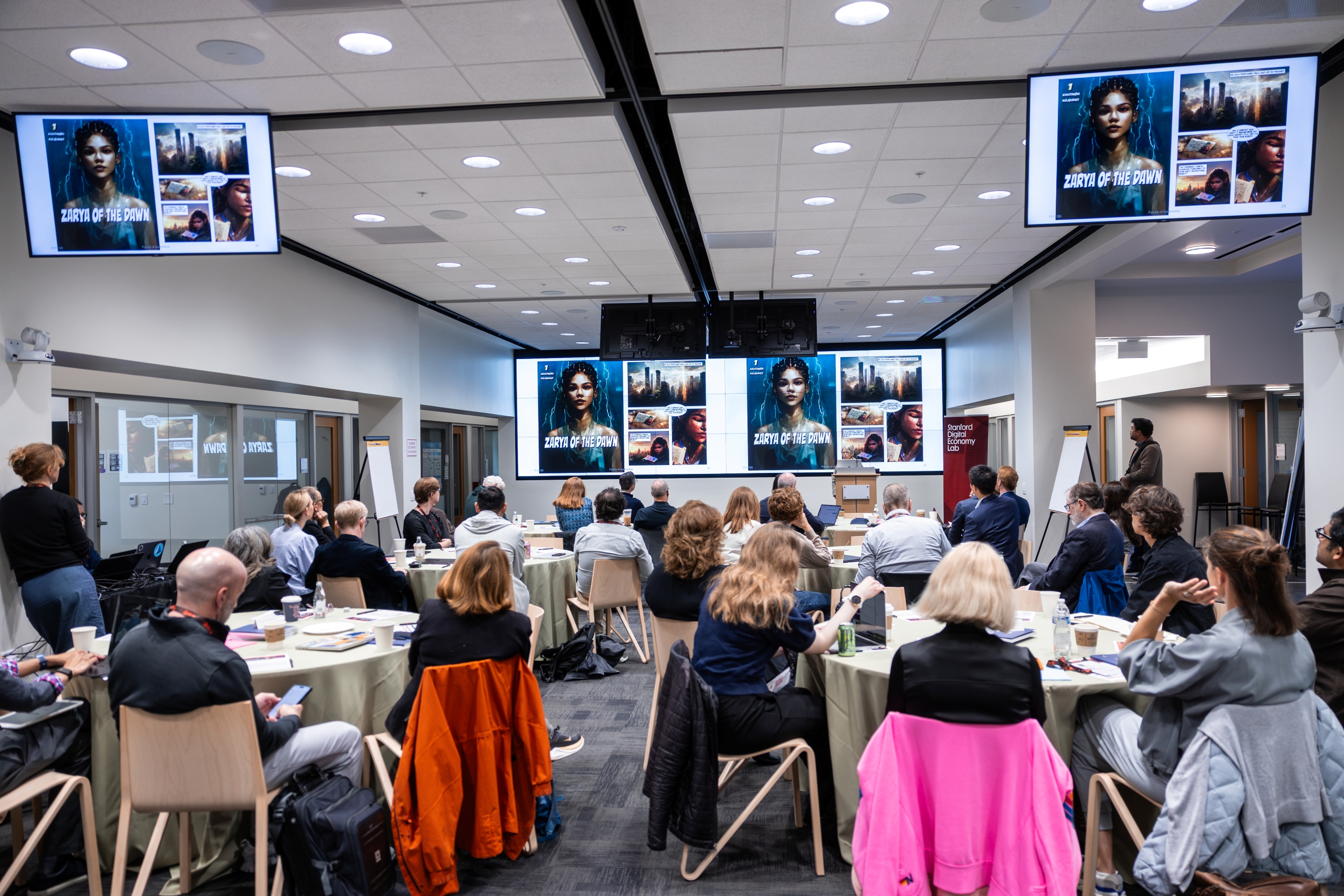
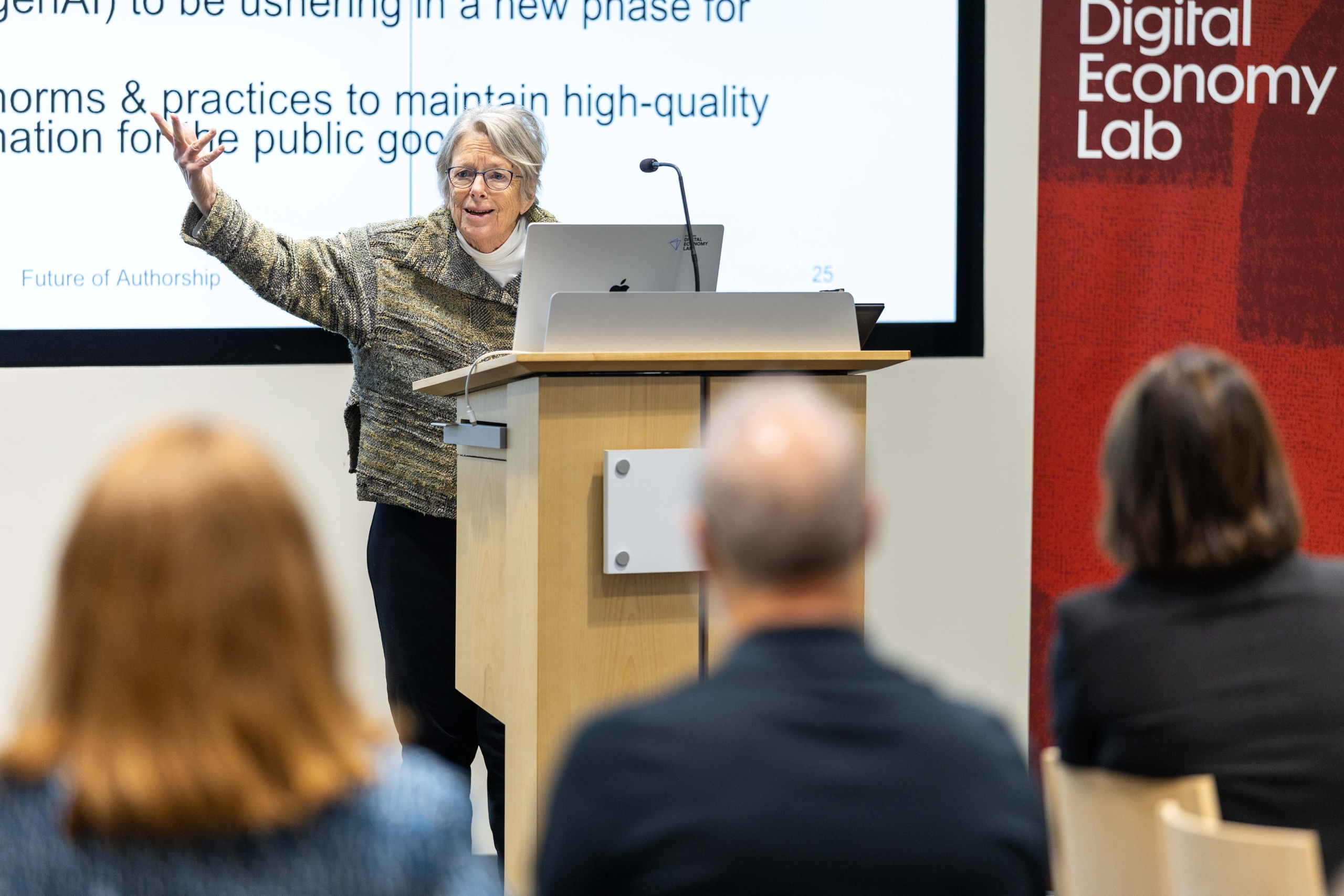
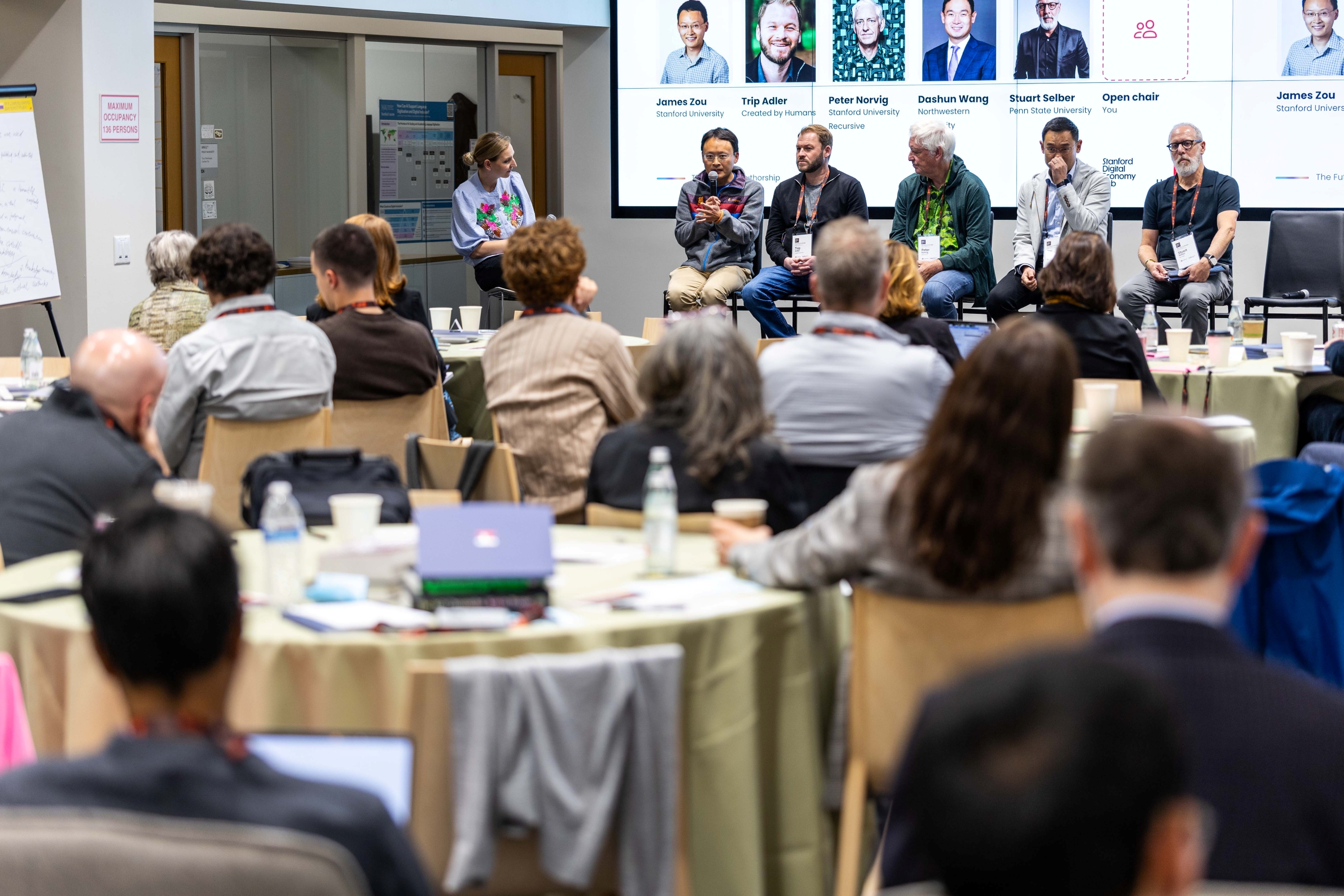
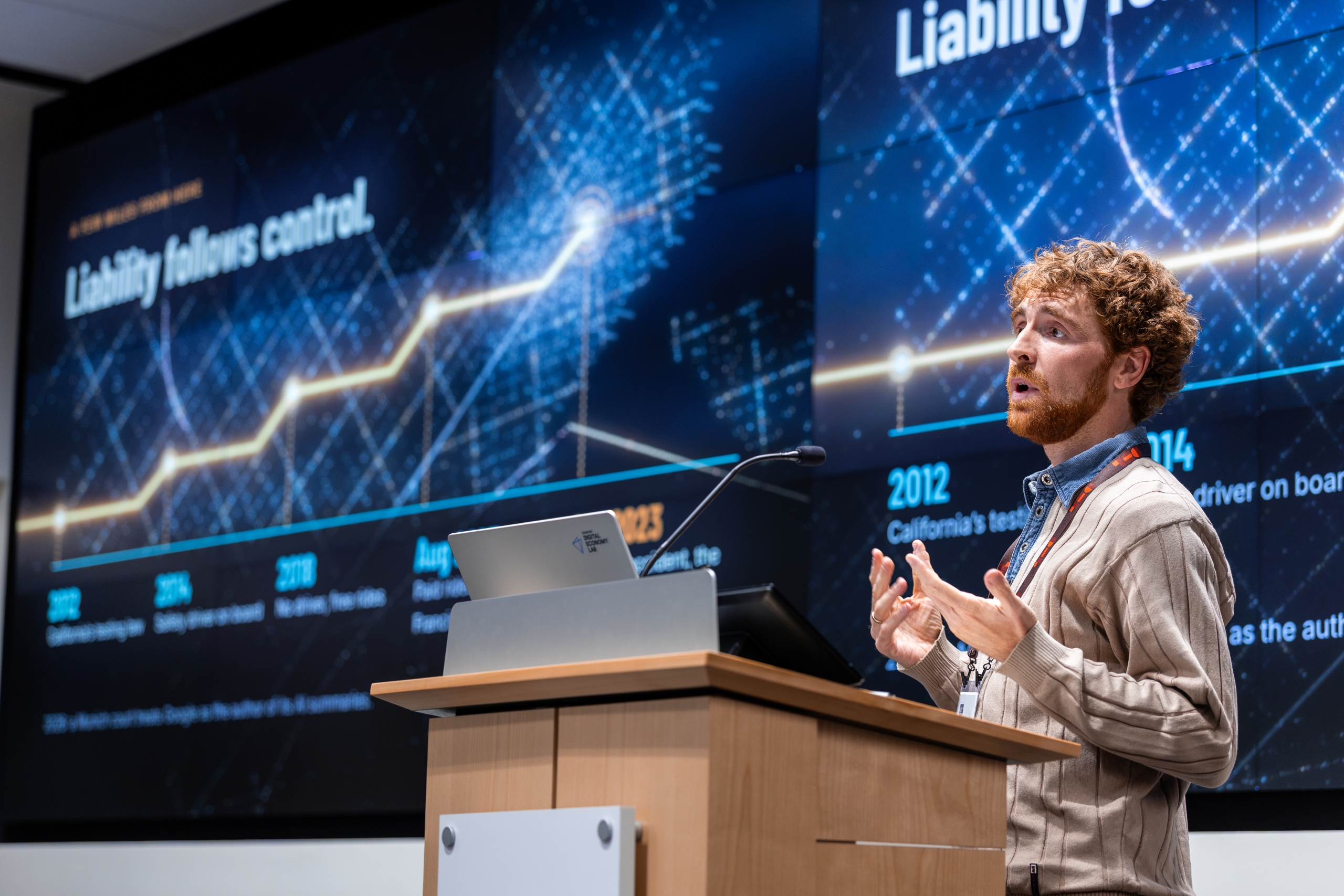
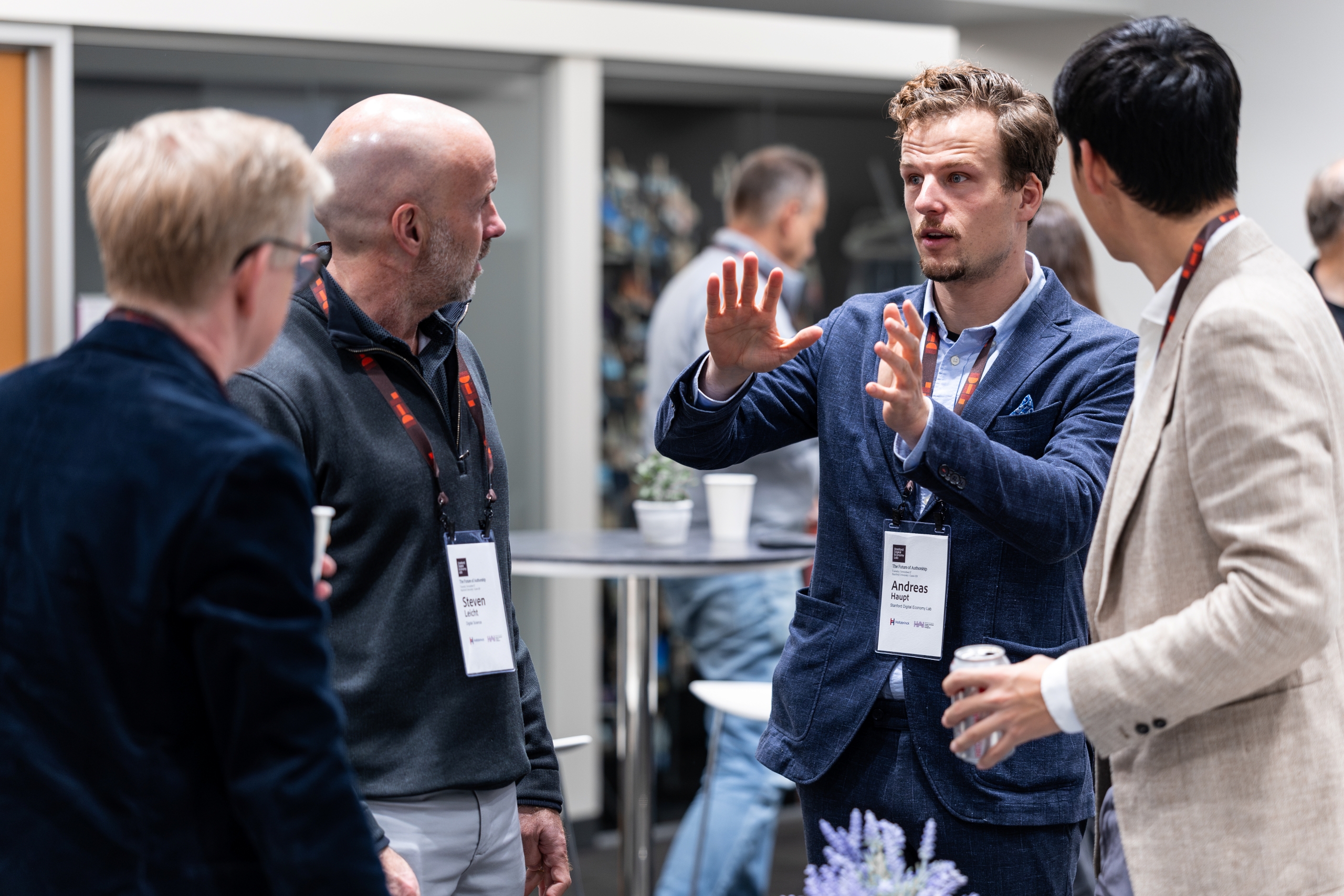
A morning panel focused on what the core of authorship was, and what it meant for humans: the importance of co-authorship in the professional lives of researchers in particular, the essential human self-expression in writing, accountability and epistemic care in publishing, and the joint process of artifact production with peer reviews. All these are examples of different roles and different relationships that authorship already had included before AI.
Consider authorship pre-AI in the field of pure mathematics and in computer science. Pure mathematicians, like economists, list authors alphabetically, on the understanding that each owns and understands the whole paper. Much of computer science distinguishes at least three kinds of author: first authors with the primary responsibility for, and credit resulting from, a paper; middle authors who contribute to parts of a paper in miscellaneous roles; and last authors who usually provide high-level guidance, project management and funding support. The CRediT taxonomy names 14 contributor roles, and AI may force us to rethink the author list itself and to record AI’s part as a structured contribution.
The question of AI authorship—can AI fill roles in contributor taxonomies for artifacts, or is it a human privilege—was highly contested among participants. In a pre-survey, the participants split evenly on whether an AI system can be an author. The more relevant questions emerged once we accepted that AI is a contributor: how should the work be evaluated, and who answers for it? Disclosure of AI use is only a first step. The second, on which the convening’s participants largely agreed, is that a human author must be able to explain and defend the work. The new Riemann proof tests that standard. Lean’s proof checker has verified it, but no human has yet explained it in full.
The afternoon led to the design of new authorship technologies and culminated in pitches of the future of authorship that could be built within one year. They highlighted new types of authorable artifacts. What could the textbook of the future look like? A coloring book that builds a portfolio? A Socratic dialogue? A chatbot-as-textbook? All these are new opportunities for authors that are enabled by AI. They also highlighted that the path is the goal: a renewed focus on documentation and credit for the process of writing, and the intimacy that arrives through wrestling with content.
The near future will most likely put into question the work of many authors. The goals we have daydreamed about for years could suddenly fall away, leaving a void of meaning for many. Historically, because writing was costly, the byline bundled multiple components. Now each must be identified separately and assigned with intention. Journals, tenure committees, prize selections and courts will need new rules for doing so. The redesign of authorship is well underway. Our convening convinced us it cannot wait, and that the harder question is who gets to decide and how it is done.
About the authors
Erik Brynjolfsson is one of the world’s leading experts on the economics of technology and artificial intelligence. He is the Jerry Yang and Akiko Yamazaki Professor and Senior Fellow at the Stanford Institute for Human-Centered AI (HAI), and Director of the Stanford Digital Economy Lab. He also is the Ralph Landau Senior Fellow at the Stanford Institute for Economic Policy Research (SIEPR), Professor by Courtesy at the Stanford Graduate School of Business and Stanford Department of Economics, and a Research Associate at the National Bureau of Economic Research (NBER).
One of the most-cited authors on the economics of information, Brynjolfsson was among the first researchers to measure productivity contributions of IT and the complementary role of organizational capital and other intangibles.
Read moreAndreas Haupt is an AI Institute Fellow-in-Residence at Schmidt Sciences, a Digital Fellow at the Stanford Digital Economy Lab, and a Technology and Human Rights Fellow at the Harvard Kennedy School. He studies how algorithmic systems represent and are evaluated against diverse human preferences, using methods from microeconomic theory, structural econometrics, and reinforcement learning. His work has been published in AI venues such as NeurIPS and ICML, in computer science venues such as ACM EC, ACM RecSys, and ACM FAccT, and as a lead article in the American Economic Review.
Read moreDaniel Hook is Chief Scientific Officer at Holtzbrinck. He was previously CEO of Digital Science, a technology and AI company that supports researchers and those in the ecosystem around them from funders to publishers, institutions to industry. He has been a strong advocate for open research and continues to carry out research in his free time.
Katharina Neubert is a media executive who leads the AI Hub she built for Holtzbrinck in San Francisco. From there, she helps the group’s global portfolio companies define and implement their AI strategies, and identifies new investments, and business opportunities with tech companies, AI labs, and startups. In doing so, she bridges science, media, and technology across Europe and the Bay Area while keeping people at the center.